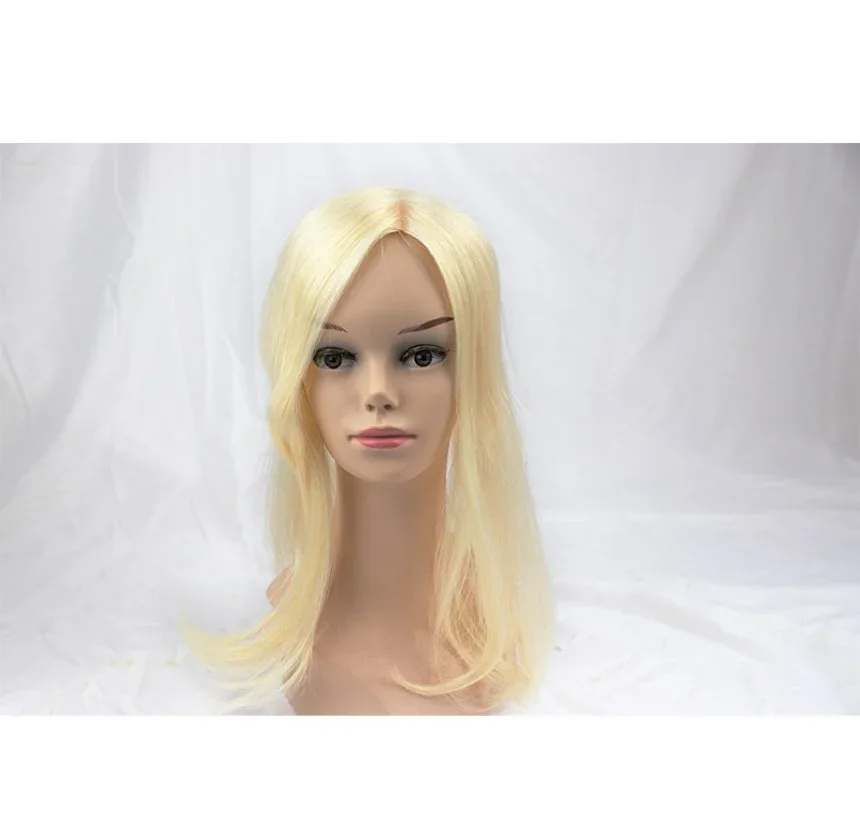
Hair topper color matching starts with deciding what the new piece should match. For a salon replacement, that might be the wearer’s current hair at the part and temples. For a retailer ordering the same shade again, it might be the physical sample kept from the last approved order. Once that’s settled, compare the proposed shade beside the reference under the same light, check the roots and blend zones, and record which sample you’re approving before placing the wholesale order.
Choose the reference before requesting a sample
Ask the person signing off what they want to see when the topper is in place. If a client brings in an old piece, have them point to the section they want to keep. They may like the roots but want to replace the lighter finish at the ends. Put that distinction in the brief before anyone chooses a swatch.
| Order situation | Use as the primary reference | Confirm before sending the brief |
|---|---|---|
| Replace a topper the wearer likes | The agreed section of the existing topper | Mark the area to copy and flag any faded, recolored, or otherwise changed sections. |
| Blend with the wearer’s current hair | The hair visible where it meets the topper | Identify the usual part, front edge, and any side sections that will sit next to the piece. |
| Buy a retail shade or reorder it | A supplier swatch for initial selection, then the approved physical sample for reorders | Record the shade code and swatch set. Ask which product or order the sample represents. |
If the wearer plans to change their hair color, agree which shade the final piece should blend with. If the current hair and an old topper disagree, say which one should guide the roots and which, if either, should guide the lengths. A short note attached to each reference saves the supplier from having to guess.
Compare the shades in daylight and indoor light
Place the dry reference and the proposed sample together on a plain, neutral surface. Align roots with roots and keep the strands running in the same direction. Look at comparable amounts of hair where possible. Start in indirect daylight, then move both samples together to the salon or showroom lighting buyers normally use. Switch off competing lights during each comparison so you can tell where the difference shows up.
A pair that looks close in daylight can separate under an indoor lamp. The International Commission on Illumination (CIE) describes how a color match can break when the light source changes. For a topper order, agree which viewing conditions matter. If the sample looks clearly warmer at the front under the salon lights, note the location and the light. That gives the supplier something specific to review.
Take photos the supplier can compare
Put the sample and reference in the same frame whenever you can. Label each one and keep the labels visible. Take an overview, then photograph the part and roots, the front blend area, and the mid-lengths and ends. For a wearer reference, hold the sample beside the relevant section and frame the hair so the wearer’s face can stay out of the shot. Repeat the key views under indoor light and label the files by lighting condition.
Use the same camera, angle, and settings within each set. Lock exposure and white balance if your camera allows it, and turn off flash, filters, and portrait retouching. A neutral gray card in frame gives the reviewer a reference for white balance. Adobe’s Camera Raw guide explains how a neutral gray area can be used to correct a color cast. Keep the original files. Use the pictures to show where a difference appears and the physical sample to make the final shade decision.
Check the roots and gray blend by area
Open the part where the topper will actually be worn. Check how dark the roots look, how far the darker area extends, and whether the transition into the lengths looks soft or abrupt. Then move to the front and sides. A blend can look right across most of the piece and still leave one conspicuously warm section next to the wearer’s hair.
Describe gray placement as well as the intended amount. “More gray near the temples, scattered through the part” is easier to review against a sample than “salt and pepper.” If your supplier uses a gray percentage, ask what it represents and which areas it covers. Confirm the gray fiber option for the selected product and record it with the sample. For a rooted or mixed shade, ask whether you can review it on the intended topper construction. Eminent Hair’s catalog includes the Silk Top and PE Line Topper and the Fine Mono and PU Edge Topper. Give the exact model name when asking which shade sample can be reviewed.
Record the approval on the purchase order
Give the accepted physical sample an ID and date, then use that ID on the purchase order. Attach the supplier’s shade code and swatch set, the topper model, the lighting used for comparison, and the views you checked. Include any agreed notes on root depth, gray placement, and the transition into the ends. Name the approver and mark the decision approved, revise and resubmit, or pending.
Send comments a supplier can act on. For example, “Keep the root shade from sample B. The front lengths look too warm beside the reference under the salon lamp. Please send a revised front blend for review.” If a revision comes back, mark the earlier sample as superseded. On a stock purchase, ask whether the sample represents the stock being quoted. On a repeat order, agree whether a new lot or any proposed change requires another comparison.
Keep the approved sample where the receiving team can find it. File the photos and notes under the same ID. When the order arrives, use that sample to assess any questioned shade under the agreed lights. A distributor ordering several colors can keep a separate approval record for each shade so that a revised brown sample doesn’t accidentally replace the reference for a gray blend on the same purchase order.
When requesting a wholesale quote from Eminent Hair, include the model, intended quantity, and the reference you plan to use. Ask what physical sample is available to review and how to identify it on the order.
Questions buyers ask about shade approval
Can I approve a shade from a phone photo?
A same-frame photo can help you shortlist candidates or explain a mismatch. If the shade is a condition of the order, compare the physical sample in person and keep the approval pending until that check is complete.
When is an existing topper the best reference?
Use it when the wearer wants to copy a specific shade they already like. Mark the exact area. When the new topper needs to blend with a recent color change, use the wearer’s current hair where the two will meet.
Can I use the same approval when I change topper models?
Ask whether the approved reference still applies to the new model and whether you can check a piece in that construction. If the part or front blend matters to the order, include those views in the new review.